THE HONG KONG JOCKEY CLUB CELEBRATES THE FINAL EIGHT WITH "EIGHT TO GLORY, PRESENTED BY LENOVO"
LINK TO REAL TIME IMAGES AND VIDEOS HERE.
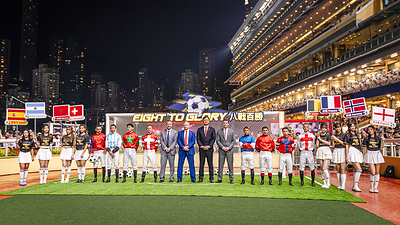
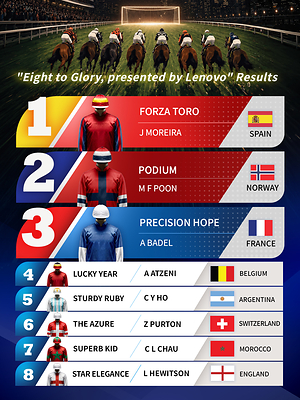
HONG KONG, July 8, 2026 /PRNewswire/ -- On Wednesday, July 8 at Happy Valley, The Hong Kong Jockey Club (the Club) presented a special race to capture a singular cultural moment: where the world's love of football joins with world-class horse racing. As the football tournament enters the quarter-finals gripping the attention of billions, the Club reframed the moment through the classic sports of horse racing. Eight thoroughbreds raced around the famous Happy Valley track in a thrilling contest of speed and courage, with Forza Toro, ridden by Joao Moreira and carrying the colours inspired by Spain, crossing the line first.
The race, "Eight to Glory, presented by Lenovo", was staged as a vibrant competition, symbolising the final eight competing for honours in Happy Valley, turning one of Asia's most iconic sporting venues into the unlikeliest football stage on earth.
The line-up for the race was as follows:
Symbolising Nation | Horse | Jockey |
Spain | Forza Toro | Joao Moreira |
Argentina | Sturdy Ruby | Vincent Ho |
Morocco | Superb Kid | Jerry Chau |
Switzerland | The Azure | Zac Purton |
Belgium | Lucky Year | Andrea Atzeni |
France | Precision Hope | Alexis Badel |
Norway | Podium | Matthew Poon |
England | Star Elegance | Lyle Hewitson |
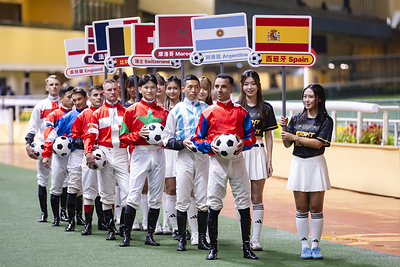
"Horse racing has always been about national pride and so is football. With "Eight to Glory", we want to bring those two worlds together in a way only The Hong Kong Jockey Club can. Eight horses lined up under the spotlights on the turf, each ridden by a jockey who is trading traditional silks for iconic football jerseys, each supporting a nation that enters the quarter-final round of the iconic tournament which will commence the next day. This is not just another race. We wanted to do something the sporting world has never seen during the world's biggest sporting event," said Casper Stylsvig, the Club's Executive Director, Sports Business, The Hong Kong Jockey Club.
Eight Hong Kong racehorses were given a moment in the spotlight, partnered by world-class Jockeys, and a human thread that turned a novel concept into a showcase of racing stars and footballing excellence.
"Eight to Glory" also features a meaningful charity component. On behalf of the eight horse owners participating in this special race, the Club makes donations to charity organisations nominated by the owners. This gives the race an additional layer of meaning that resembles "racing for charity" as the Club, being one of the world's leading charity donors, acts continuously for the betterment of society.
The Club has entered into a new strategic partnership with Lenovo, Official Technology Partner of FIFA World Cup 2026™. On the race day, Lenovo presented the Lenovo Experience Booth, an immersive AI-powered football zone that showcases technologies associated with Lenovo's role at FIFA World Cup 2026™.
LINK TO REAL TIME IMAGES AND VIDEOS HERE.
Racecourse entrants must be aged 18 or above. Please refer to promotional materials, terms and conditions for details. Photos are for reference only and may be different from their actual appearance. Details of activities and offers are subject to change or cancellation without notice or compensation. The decision of The Hong Kong Jockey Club shall be final. For enquiries, please call the Club's Customer Hotline 1817.
About The Hong Kong Jockey Club
Founded in 1884, The Hong Kong Jockey Club is a world-class sports and entertainment organisation that acts continuously for the betterment of our society. The Club has a unique integrated business model, comprising racing and racecourse entertainment, a membership club, and charities and community contribution. Through this model, the Club generates economic and social value for the community. In 2024/25, the Club returned a total of HK$39.1 billion to the community. This included HK$30.1 billion to the HKSAR Government in taxes and contributions and HK$9.0 billion in approved charity donations. The Club is Hong Kong's largest single taxpayer and one of the city's major employers. Its Charities Trust is one of the world's leading charity donors. Please visit www.hkjc.com.
 View original content to download multimedia:https://www.prnewswire.co.uk/news-releases/the-hong-kong-jockey-club-celebrates-the-final-eight-with-eight-to-glory-presented-by-lenovo-302821078.html