JA Powers Fisher & Paykel Healthcare's Green Transition with New Zealand's Largest Rooftop PV System
BEIJING, Aug. 20, 2026 /PRNewswire/ -- Recently, JA powered Fisher & Paykel Healthcare's step toward a more ecosystem-friendly future by supplying New Zealand's largest rooftop photovoltaic (PV) power station in Auckland. The 5.3 MWp system, featuring JA's high-efficiency modules from their deep blue series, is helping transform healthcare manufacturing toward greener, lower-carbon practices.
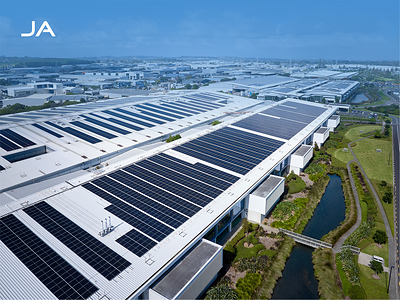
To support the Fisher & Paykel project, JA supplied and installed 8,273 modules — demonstrating its ability to deliver at scale and manage multi-party construction, both of which require precise scheduling and on-site coordination. This success was underpinned by JA's extensive experience in global projects and its warehouse network, which further ensured high-quality, on-time delivery.
In response to the global energy volatility crisis, New Zealand faced the need to increase energy independence and accelerate low-carbon transformation. As the exclusive module supplier, JA offers high-efficiency modules that are fully adaptable to challenging rooftop environments. Accordingly, these modules deliver an annual average of 6,600 MWh of power generation, reducing carbon emissions by 486 tons per year. This data suggests the modules' ability to reduce reliance on fossil fuels and set a standard for a sector-wide low-carbon transition.
Thus far, the DeepBlue series has operated with zero commissioning failures, achieving excellent power-generation efficiency and stable output. This reliability is rooted in JA's position as one of the first PV companies to enter the New Zealand market and its willingness to listen and grow in line with local demand. In support of this, research on Chinese customs export data suggests that China's PV exports to New Zealand rose to 365.5 MW at the beginning of 2025 and continued to expand to 735.5MW one year later. This suggests a growth of 101.26%, effectively doubling the market size. This surge unequivocally confirms JA's strategic market foresight and the timing of its calibrated expansion.
Sunergise is New Zealand's leading renewable energy developer and the EPC for this project; their CEO, Paul Makumbe, describes the collaboration with JA as "When you're rolling out New Zealand's largest rooftop solar, you need a partner who is reliable, who has the technical capability to deliver, has know-how and understanding of the challenges that you would face doing a project of this scale."
Rooted in the global market, JA prioritized product reliability, delivering stability and commitment to full-cycle quality. The DeepBlue series high-efficiency module has proven its value by performing in complex environments worldwide. Moving forward, JA will continue to collaborate with global partners, supporting industries across sectors to accelerate low-carbon transformation — delivering reliable power for the journey ahead —and helping the world pave the way toward a zero-carbon future.
 View original content to download multimedia:https://www.prnewswire.co.uk/news-releases/ja-powers-fisher--paykel-healthcares-green-transition-with-new-zealands-largest-rooftop-pv-system-302855929.html